



- In Russia
- Saint Petersburg
- Moscow
- Golden Ring
- Kazan
- Yekaterinburg
- Irkutsk
- Vladivostok
- Nizhny Novgorod
- Petrozavodsk
- Murmansk
- Kaliningrad
- Sochi
- In Belarus
- In Armenia
- In Georgia
- In Uzbekistan
- Excursions in Moscow
- Excursions in Saint Petersburg
- Theatre ticket
- Hotels in Moscow
- Hotels in Saint Petersburg
- Transfers in Moscow
- Transfers in Saint Petersburg
News
29 September 2026
Kazan Kremlin is the main tourist gem of Tatarstan and one of Russia's most visited landmarks: about two million guests explore its grounds every year.
01 September 2026
Almost everyone knows the Golden Ring of Russia: even those who have never been there have heard about its ancient cities, golden domes, and monasteries.KAZAN KREMLIN - SIGNATURE LANDMARK OF THE TATAR CAPITAL
29 September 2026
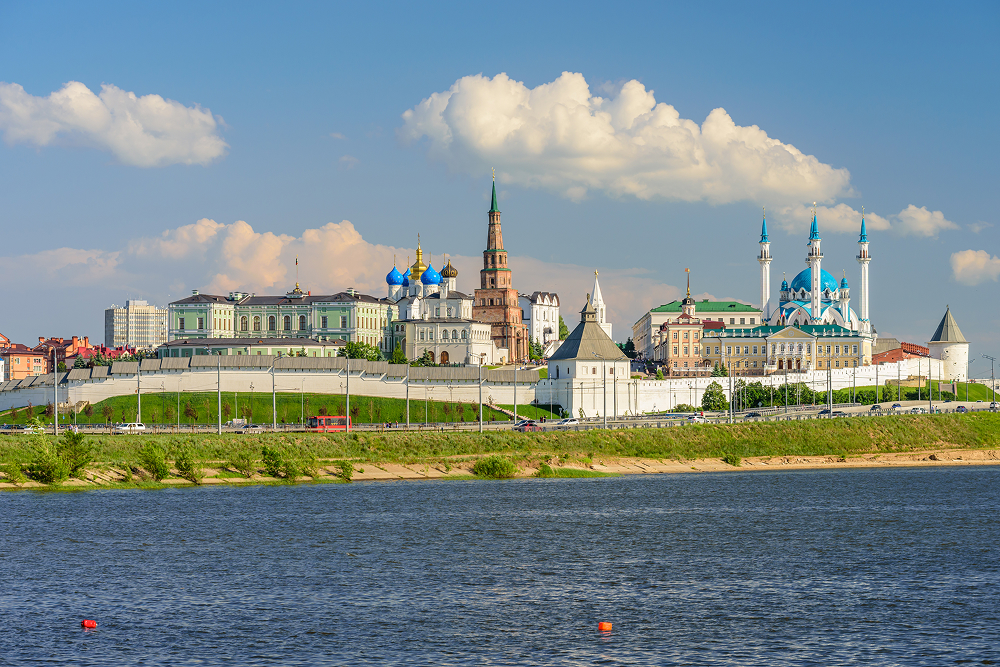
Kazan Kremlin is the main tourist gem of Tatarstan and one of Russia's most visited landmarks: about two million guests explore its grounds every year. In 2000, the Kremlin was inscribed on the UNESCO World Heritage List — the first federal heritage site in the Volga region to receive this status. What makes the place unique is that it is the only surviving Tatar fortress in Russia: white-stone walls stretching almost two kilometres with thirteen towers rise on a high promontory at the confluence of the Volga and Kazanka rivers, right in the historic centre of the city. Entrance to the grounds is free, and the Kremlin sits next to the embankment, the National Museum and pedestrian streets, making it the natural hub of any tourist route through Kazan.
The Kremlin's historical significance is measured in centuries: a settlement existed on this site as early as the 10th century, and during the era of the Kazan Khanate the fortress was its heart. After Ivan the Terrible captured Kazan in 1552, Pskov architects rebuilt it in stone, and since then unique structures have been preserved here: the Annunciation Cathedral of 1561–1562 — the oldest stone building in the city — and the famous leaning Syuyumbike Tower, 58 metres tall, which has tilted almost two metres off its axis and has become the symbol of Kazan. The Kremlin also housed and still houses the residence of the head of the republic — the Governor's (Presidential) Palace — so the fortress has remained the centre of political power for more than five hundred years.
The Kremlin's cultural significance lies in a fusion of two religions on one site that is unique in the world: the Orthodox Annunciation Cathedral and the Kul Sharif Mosque stand side by side here. The mosque was opened in 2005 to mark Kazan's millennium and is named in memory of the last imam of the Khanate, who died defending the city in 1552. This coexistence is regarded as a symbol of dialogue between civilisations and attracts both pilgrims and secular tourists alike. Today the Kremlin is the region's largest museum-reserve, with a collection of archaeological finds and permanent exhibitions, a venue for international festivals and concerts, and the signature landmark of Kazan by which the city is known around the world.